
Thus, the fundamental objectives for this semester include, on the one hand, sharing the specific and necessary codes to decipher audiovisual language with a critical sense, trying to trace the evolution of audiovisual media within design and contemporary art through different variants or typologies (photography, film, video art and installation), and then, on the other hand, promote research and experimentation to enhance the students’ practice.
This space should be considered a laboratory, a collaborative work place offering both a theoretical and practical approach. Each student should research and experiment to enrich their voice and contribute with the rest of the class by sharing their findings, processes and materials. We promote an attentive look capable of discerning the keys to audiovisual language; the lights and the shadows, the obvious and the subtle, the visible and the invisible, the rational assumptions and the sensitive discharges. To put it in a nutshell, we are going to focus on the mysteries of perception, a territory surrounded by art, philosophy, neuroscience, psychoanalysis and many more disciplines, an indeterminate place that will help us boost, improve and expand our creativity.
Let’s try to see what the images communicate by looking carefully at what their narratives suggest or hide.
Let’s produce images to understand how they come to life and let’s find new ways to create images, let’s hack processes in order to be surprised by what they trigger.
Let’s create new narratives trough images.
We identify three chapters that are accompanied and closely related to the three main projects. The contents are deployed in two ways, on the one hand, there are masterclasses to introduce each section, providing the experiences of unique creatives and, on the other hand, there are several in-class short activities, especially in the first half of the semester to help the students break the ice and become aware, in a practical way, of the theory previously exposed.
The first part explores language, rhetoric and visual metaphors. It involves active research to train an analytical eye and create a critical sense.
The second part is based on experimentation with both materials and processes.
The third and final part invites the students to explore the codes and possibilities of narrating in a space-time framework.
Main projects or challenges:
01. The correct completion and presentation of all projects will account for 80% of the final grade.
02. In class active participation and cooperative attitude will account for the remaining 20%.
Thus, the final qualification criteria will be the following:
20% Challenge 01_Enlightening links
30% Challenge 02_Unknown artist
30% Challenge 03_Tracing an exhibition
20% In-class activities
Typologies:
Daston, L. and Galison, P. (2010) Objectivity. 1. paperback ed. New York: Zone Books.
Bajac, Q. (2010) La subversión de las imágenes : surrealismo, fotografía, cine. Madrid: TF.
Benjamin, W. (2011). Breve historia de la fotografía, Madrid: Casimiro.
Berger, J. & Christie, J., (2000). Te mando este rojo cadmio… Cartas entre John Berger y John Christie. Barcelona: Actar.
Brodsky, M. (2009). Correspondencias Visuales. Buenos Aires: La Marca Editora.
Fontcuberta, J. (2011) El beso de Judas : fotografía y verdad. Barcelona: Gustavo Gili.
Kepes, G. (1995) Language of vision. New York: Dover.
Krauss, R. (2002). Lo fotográfico. Por una teoría de los desplazamientos. Barcelona: G. Gili.
Moholy Naghy, L. ( 2005). Pintura, fotografía y cine, Barcelona: Gustavo Gili.
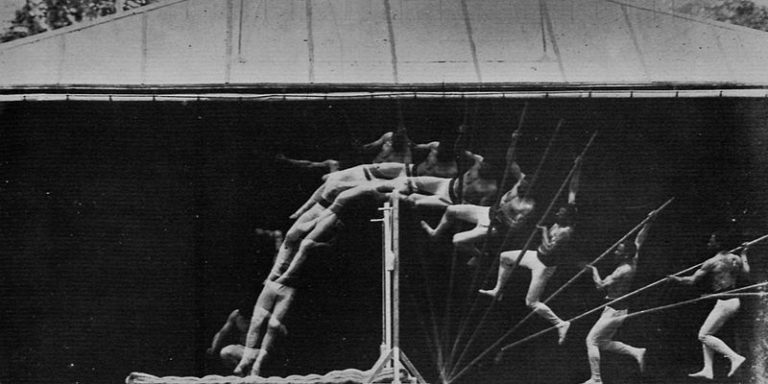
Muestra buena comprensión e interpretación de los valores simbólicos y culturales que contextualizan las diferentes representaciones visuales.
Comprende el papel fundamental de las diferentes variantes de la imagen (fotografía, vídeo e instalación).
Muestra conocimientos básicos y habilidades técnicas y expresivas en la realización con la fotográfica, el video y la instalación.
Aplica sus conocimientos, la comprensión y sus capacidades de resolución de problemas en el ámbito profesional del diseño de forma creativa e innovadora.
Realiza procesos de evaluación sobre la práctica y de otras maneras de forma crítica y responsable.
Utiliza el lenguaje audiovisual y sus diferentes recursos para expresar y presentar contenidos vinculados al conocimiento específico de su ámbito.